
There is a version of exhaustion that makes sense after a hard week. Then there is the kind where you rest, sleep, cancel plans, take a quiet weekend, and still feel like you have very little left to give.
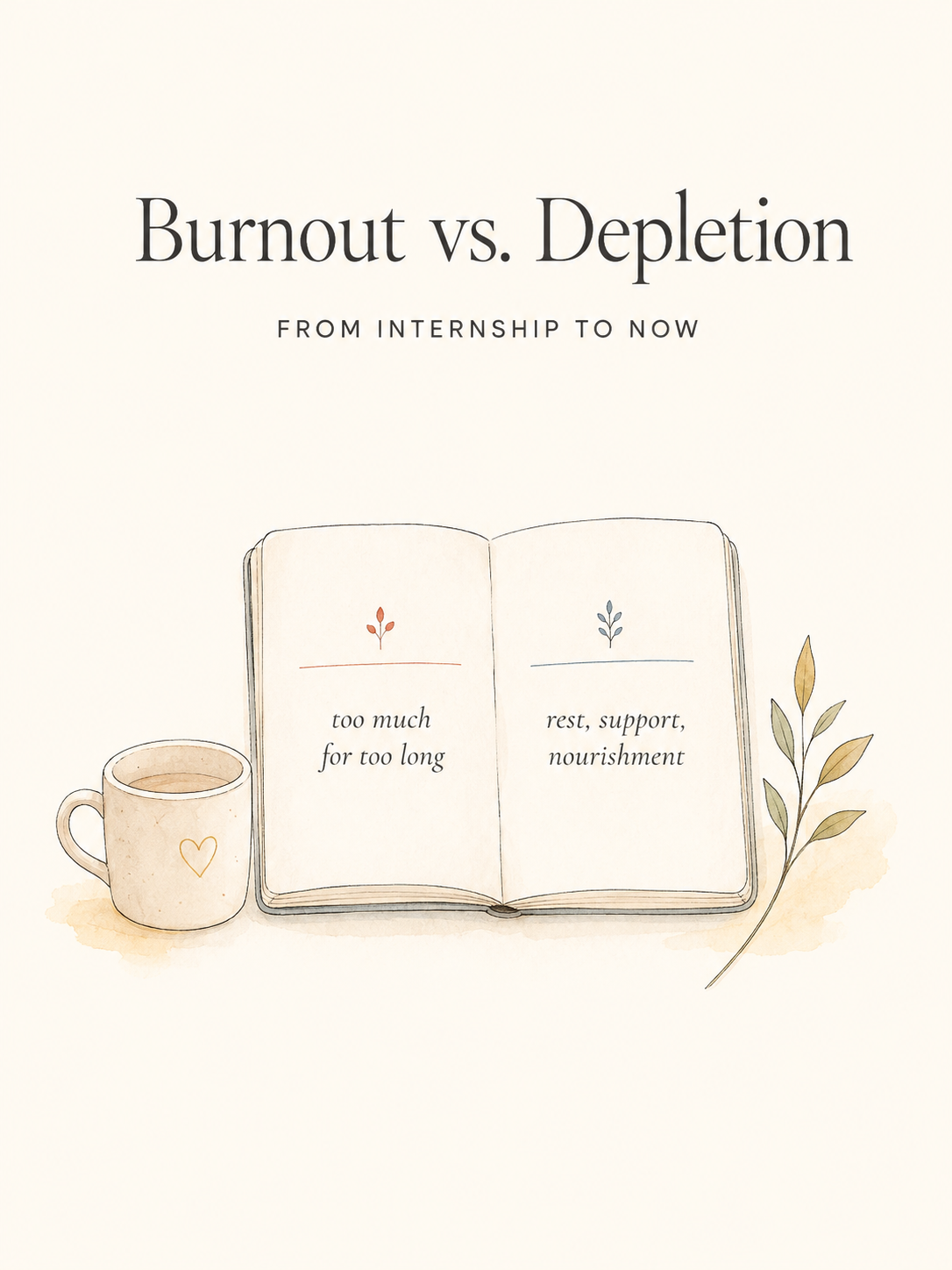
I have been thinking about the difference between burnout and what I would call depletion. I do not mean depletion as a diagnosis. I mean it as plain language for the feeling that your emotional, physical, or mental reserves have been used faster than they are being restored.
Burnout Has a Specific Work Context
The World Health Organization describes burnout as an occupational phenomenon connected to chronic workplace stress that has not been successfully managed. The description centers on exhaustion, growing distance or cynicism toward the job, and reduced professional effectiveness.
That matters because we use the word burnout for almost everything now. Parenting can be exhausting. Grief can be exhausting. School can be exhausting. Caring for someone can be exhausting. Life can be exhausting. Those experiences are real, but burnout has a narrower occupational meaning in the WHO framework.
Depletion Is the Word I Use When the Problem Feels Bigger Than Work
Depletion is not a clinical label. I use it when several demands are pulling from the same person at once and there is not enough recovery happening between them.
You can enjoy your work and still feel depleted. You can take a vacation and still come back tired. You can have supportive people around you and still notice that basic tasks are taking more effort than usual.
Sometimes the question is not, “Do I hate my job?” It is, “How many parts of my life are currently asking something from me?”
Why Self-Care Alone Can Feel Insulting
There is nothing wrong with sleep, hobbies, exercise, time off, or doing something that helps you feel more like yourself. Those things can matter.
But sometimes exhaustion is being produced by the structure around you. Long hours. Too little control. Documentation demands. Unpredictable schedules. Emotional labor. Staffing problems. Financial pressure. Being expected to remain available after work.
NIOSH research on worker well-being repeatedly points back to working conditions and organizational practices. That is important because it means we should be careful about turning every workplace problem into an individual coping problem.
What Kind of Tired Are You?
One question I find more useful than “Do I need better self-care?” is:
What is using the energy faster than I can replace it?
Maybe the answer is work. Maybe it is work plus caregiving plus money stress plus poor sleep. Maybe it is a role that asks you to remain emotionally available all day and then go home and keep doing the same thing for everyone else.
The answer changes what support might actually help.
Try This
Draw two columns. Label one What drains me and the other What restores me.
Then look at the first column and circle anything that could realistically be changed, reduced, delegated, delayed, discussed, or given a boundary. Rest matters. So does changing the thing that keeps requiring recovery.
Research notes
- World Health Organization, ICD-11 guidance on burnout as an occupational phenomenon resulting from chronic workplace stress that has not been successfully managed.
- CDC/NIOSH, Risk Factors for Stress and Burnout, including workload, scheduling, administrative burden, emotional demands, and limited control.
- CDC/NIOSH, Supporting Mental Health in the Workplace and Impact Wellbeing resources, emphasizing workplace policies and working conditions as important targets for improving worker well-being.
- “Depletion” is used in this post as descriptive language, not as a diagnosis or formal clinical construct.
Leave a Reply